About Fluid Dynamics Group
The flow of fluids, such as air, exhibits extremely complex behavior. While extensive research through experiments and numerical simulations has revealed many aspects of fluid dynamics, there are still many phenomena that need to be elucidated under special conditions, such as the very low-pressure environments in which Mars exploration aircraft are being developed, flows containing fine particles, and complex phenomena like supersonic impinging jets. We aim to elucidate these fluid phenomena by employing computational fluid dynamics, experimental fluid dynamics, and data-driven fluid dynamics.
Research on Low Reynolds Number Compressible Flow
Mars aircraft operate in a low-pressure environment with atmospheric pressure less than 1/100 of Earth's. Consequently, the fluid dynamics around Mars aircraft are entirely different from those around aircraft on Earth, and the existing knowledge cannot be applied. In the Martian atmosphere, the operating fluid's density is low, resulting in a low Reynolds number. On the other hand, due to low temperatures and the low speed of sound, the Mach number becomes high, creating a unique condition of low Reynolds number and high Mach number. While low Reynolds number incompressible flows can be studied through wind tunnel experiments by reducing the flow velocity, the conditions of low Reynolds number and high Mach number cannot be reproduced in conventional wind tunnels, making the knowledge very limited. Therefore, we are investigating the fundamental characteristics of the flow through numerical simulations and experiments.
1. Research on Turbulence Transition in Low Reynolds Number Compressible Flows
In low Reynolds number flows around airfoils, laminar separation bubbles and turbulence transition significantly affect aerodynamic characteristics. It is expected that compressibility also has a considerable impact on these phenomena. Currently, we are investigating the effects of compressibility on the processes of laminar separation bubble formation and turbulence transition on a blunt flat plate using Large-Eddy Simulation (LES) with supercomputers.
2. Research on Flow Around Objects in Low Reynolds Number Compressible Flows
In designing Mars exploration aircraft and high-altitude unmanned aerial vehicles, it is essential to understand the characteristics of low Reynolds number compressible flows around airfoils and various other shapes. Even for basic shapes such as airfoils and blunt bodies (non-streamlined objects like cylinders and square prisms), the flow fields and aerodynamic characteristics in low Reynolds number compressible flows are often not well understood. We are elucidating fundamental knowledge necessary for the design of fluid machinery through numerical simulations and experiments, focusing on flows around single objects and the aerodynamic interference between two objects.
3. Development of Visualization Measurement Techniques under Low-Pressure Conditions
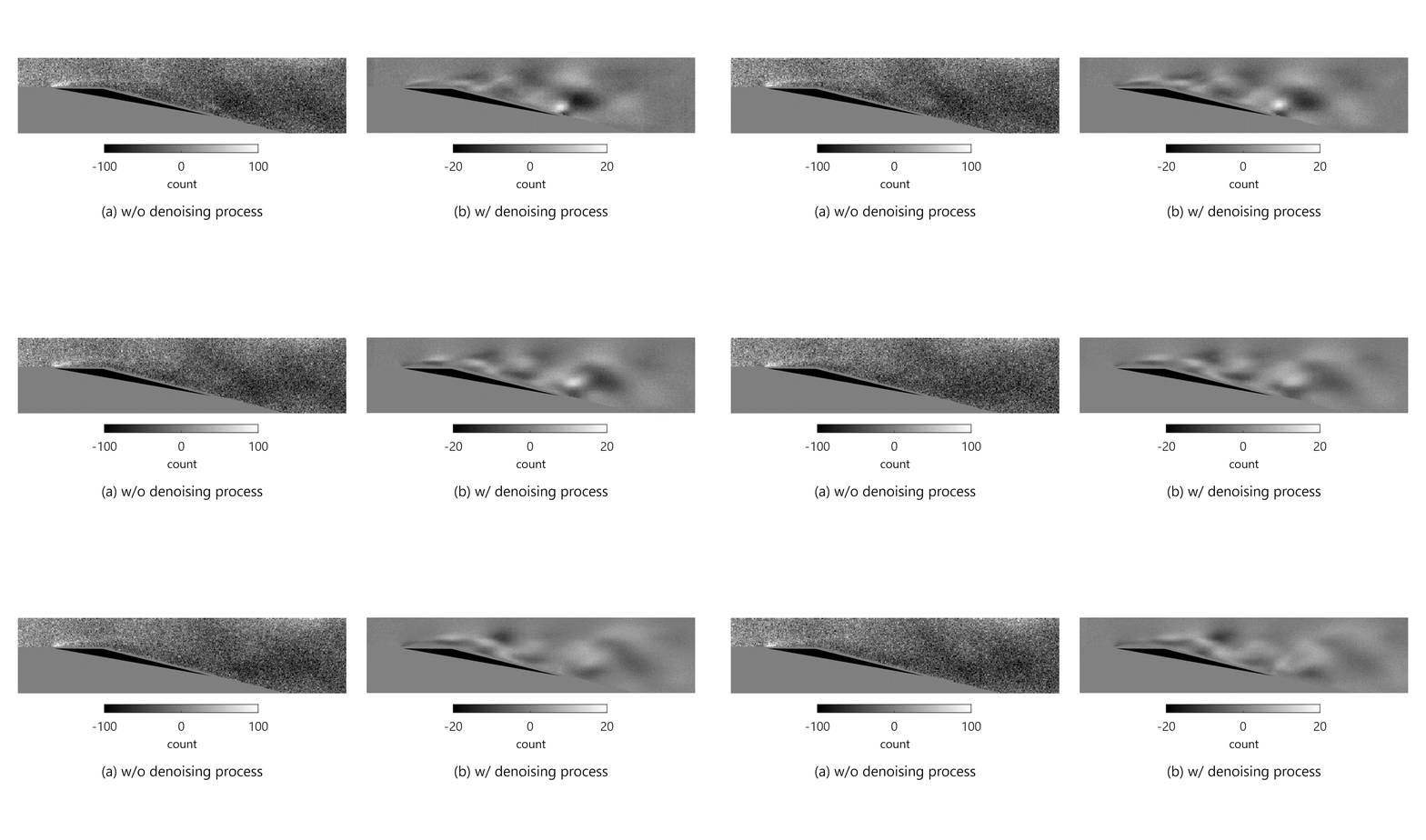
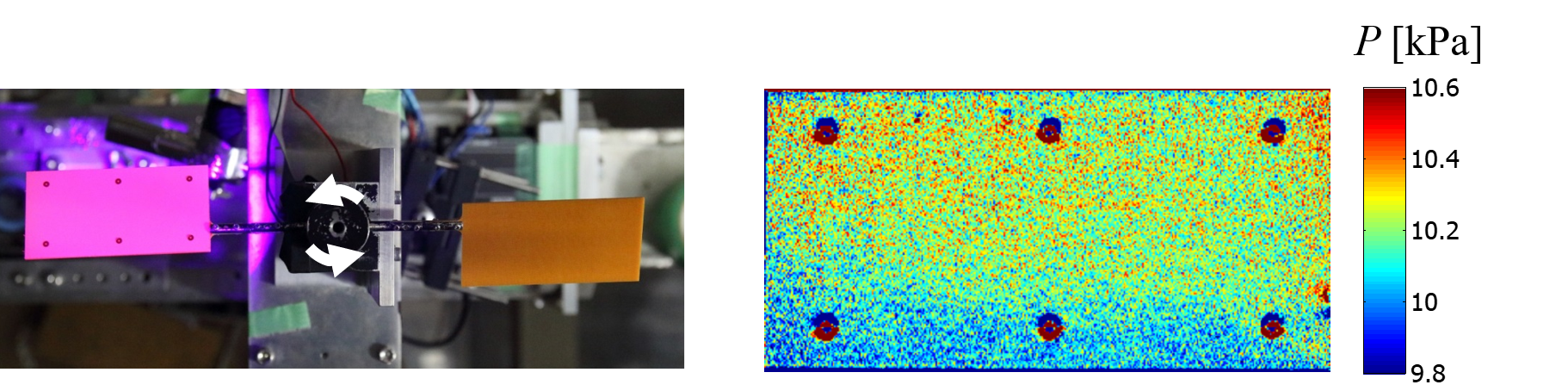
To experimentally create low Reynolds number compressible flows, it is necessary to conduct experiments with small models in low-pressure environments. Under such conditions, various constraints arise compared to atmospheric pressure. In particular, due to the low density of the operating fluid, the sensitivity of optical visualization methods such as the Schlieren method, which visualizes density fluctuations to investigate the flow field, and pressure-sensitive paint decreases. As a result, the signal-to-noise ratio of the measurement data is low, making it difficult to grasp fluid phenomena. Therefore, we are conducting research on developing denoising techniques using mode decomposition and realizing pressure-sensitive paint measurements with high sensitivity even under low-pressure conditions.
Research on Compressible Multiphase Flows
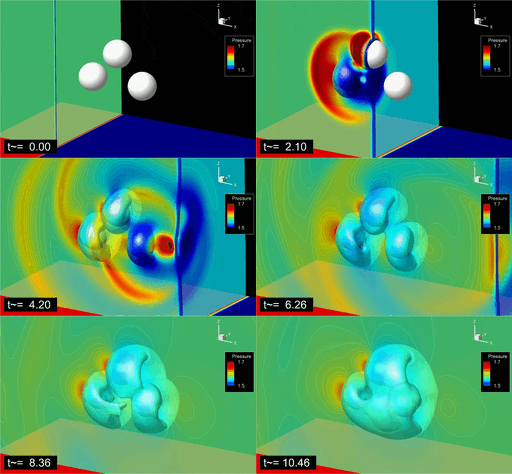
n our surroundings, we often encounter multiphase flows that include solid particles or droplets, in addition to flows consisting solely of gases or liquids. Particles in the flow field can introduce turbulence or, conversely, dampen it, significantly affecting the overall characteristics of the flow. Therefore, it is necessary to understand the influence of particles and develop models that can accurately capture their effects in numerical simulations. In the aerospace field, for example, the exhaust jets of rocket engines contain aluminum particles from solid propellants and droplets from water spray at the launch site, which constitute compressible multiphase flows interacting with supersonic jets. Additionally, in combustion chambers, atomized fuel undergoes combustion while being subjected to high-speed flows. Through numerical simulations and experiments, we are studying the flow around particles in high-speed multiphase flows and performing particle-resolved simulations of multiphase flow fields to accumulate knowledge on compressible multiphase flows.
1. Elucidation and Modeling of Low Reynolds Number Compressible Flows Around a Sphere
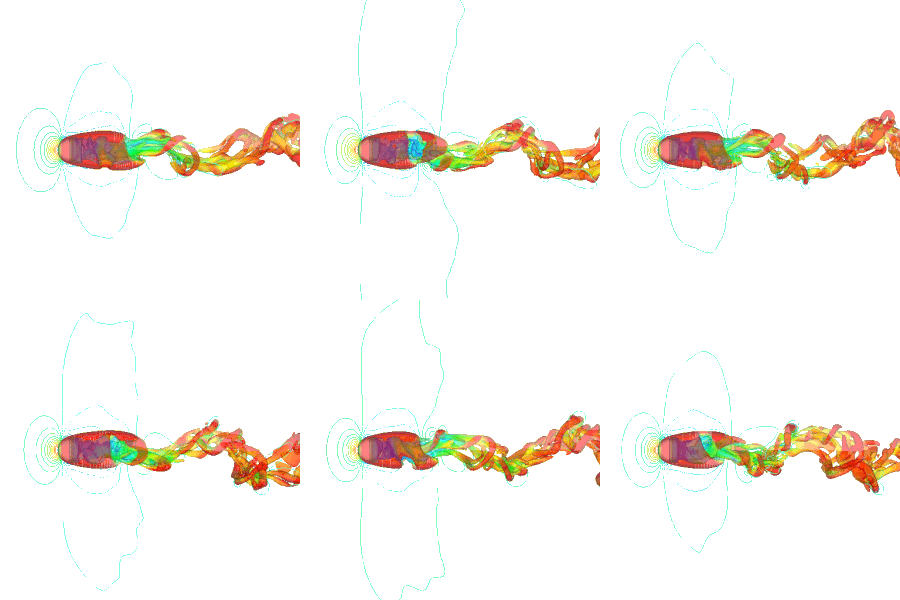
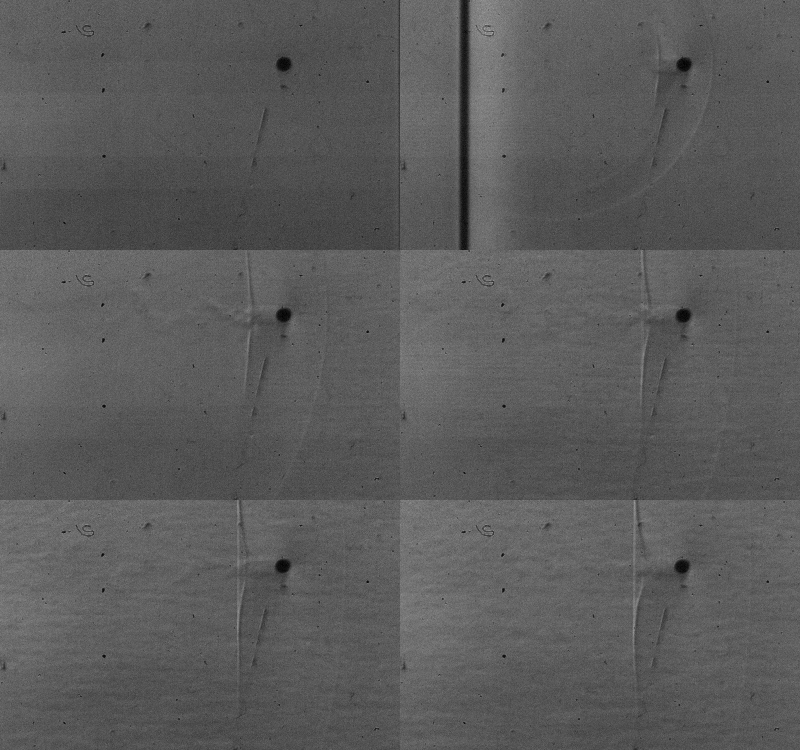
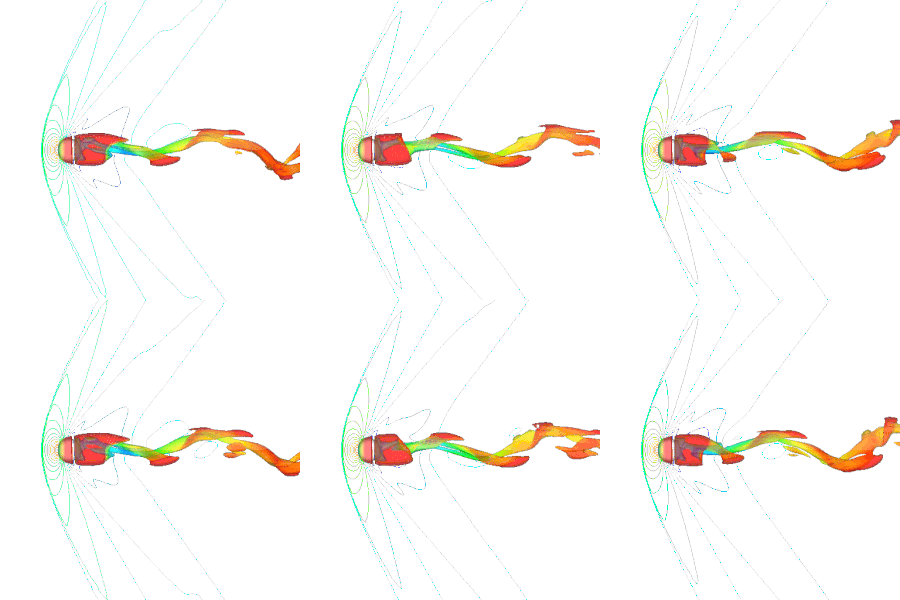
The sizes of particles in the flow range from a few micrometers to several hundred micrometers in diameter, while the overall scale of the flow field spans tens or even hundreds of meters. Therefore, resolving the flow around particles while capturing the entire multiphase flow field requires enormous computational resources. For incompressible flows, multiphase flow models that describe the influence of particles have been constructed based on extensive data on the flow around spheres accumulated through theory, experiments, and numerical simulations. However, for compressible flows, knowledge of the flow around spheres is very limited. To analyze large-scale compressible multiphase flows, it is necessary to elucidate the fundamental characteristics of the flow around spheres required for constructing models. Thus far, we have conducted research on the flow around spheres using direct numerical simulations of the Navier-Stokes equations on supercomputers, free-flight tests of spheres using ballistic flight apparatus, and experiments on the interaction between particles and normal shock waves using shock tubes. Our numerical simulations have investigated not only the effects of Reynolds number and Mach number but also the effects of particle rotation, velocity gradients in the flow field, and particle temperature.
2. Direct Numerical Analysis of Compressible Gas-Particle Multiphase Flows
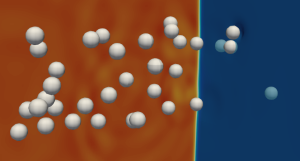
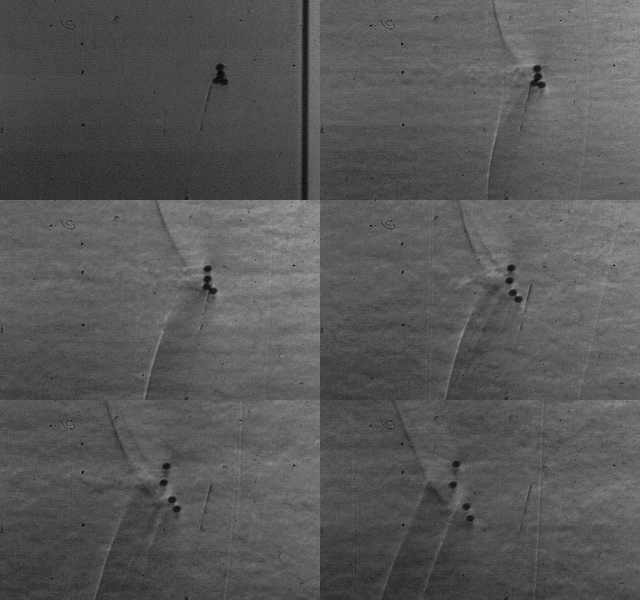
When the number density of particles is high, the hydrodynamic interactions between particles and the influence of particles on the fluid field cannot be ignored. To investigate these effects, we are conducting numerical simulations and experiments with multiple particles. Currently, we are preparing for large-scale simulations that consider a large number of particles.